Jul 29, 2026 / By Melissa McClements
SHORT TAKE: Earth Overshoot Day on 30 July is a warning shot: the linear economy is running up against planetary limits. The circular economy isn't a sustainability trend; it's an economic reset that reduces risk, creates new revenue opportunities and enables businesses to grow within those limits. Companies that redesign, repair and reuse will be the ones that endure.
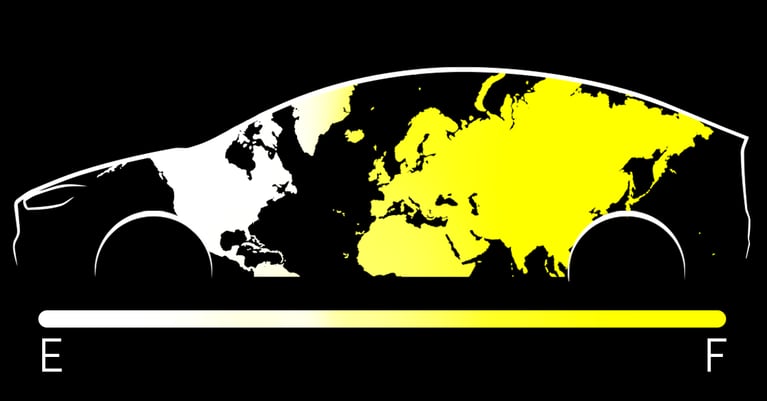
This year, Earth Overshoot Day falls on July 30, and it’s occurring progressively earlier with each passing year. It marks the point at which humanity's annual resource consumption exceeds Earth's capacity to regenerate those resources, reminding us that we are living beyond our ecological means. If current trends continue, we will require the resources of two Earths by 2030. Clearly, this is neither environmentally nor economically viable, making circular business models an economic necessity rather than an environmental choice.
Securing long-term resilience and creating new revenue streams
The move to a circular economy means shifting away from the linear "take, make and dump" model to one that eliminates waste and keeps materials, products and resources in circulation for as long as possible. By decoupling growth from resource extraction, businesses can build long-term resilience, reduce production costs and develop new revenue streams. Those that fail to adapt will remain exposed to raw material scarcity, supply chain volatility and geopolitical instability.
An evolving policy context
Outside of the U.S., government policies are increasingly focused on circularity. China’s latest five-year plan, which runs until 2030, aims to raise the circular economy industry's output to Yuan 8 trillion (U.S. $1.17 trillion), improve resource efficiency and greatly increase the recycling of industrial waste and renewable materials such as metals, batteries, wind and solar equipment.
Momentum is building elsewhere, too. Earlier this year, Mexico enacted the General Law on Circular Economy, which obligates producers and importers to integrate circularity principles across product design, production, consumption and waste management. Meanwhile, Japan has a circular economy framework, centered on the Basic Act for Establishing a Sound Material-Cycle Society. Recent updates have shifted the framework from voluntary targets to enforceable requirements, requiring manufacturers to meet obligations for recycled resource use and eco-conscious design.
Towards the end of the year, the European Commission will release its legislative proposal for the Circular Economy Act. The specific terms will be negotiated before a final version is adopted, but the aim is to establish a single market for secondary raw materials, double the bloc’s circular material use rate from 12.2% to 24% by 2030, and reduce reliance on imported resources. The effects are likely to extend well beyond Europe, as multinational companies will find it economically and operationally impractical to maintain different operating models for different markets. Circularity is becoming a global business imperative, not just a regional regulatory requirement.
The business models driving the circular economy
As the transition to a circular economy gathers pace, a new generation of business models is emerging.
 Giving technology a second life: Refurbished tech
Electronic waste has become one of the world’s fastest-growing waste streams. With 62 million metric tons generated globally in 2022, the volume of discarded electronic material has nearly doubled since 2010 and is forecast to exceed 80 million metric tons by 2030. The refurbished tech market emerged to extend the life of electronic devices, reduce e-waste and recover the value of existing materials. By cleaning, repairing, and testing used electronics, refurbishers restore devices to like-new condition, reducing demand for new resource extraction.
Now worth $10.5 billion, the industry is dominated by major brands including Apple Certified Refurbished and Samsung Certified Re-Newed, alongside dedicated global marketplaces, such as Back Market and Amazon Renewed.
 Access over ownership: Product-as-a-service
Western culture has taught us that the accumulation of goods is a marker of success, but that worldview is changing, especially among Gen Z. A blend of economic necessity, environmental awareness and lifestyle preference means that owning less stuff is becoming more desirable. In this context, the product-as-a-service business model is gaining ground. Rather than purchasing a product outright, customers pay for access to its function through a subscription, leaving providers responsible for maintenance and end-of-life recycling. This incentivizes them to design durable, easily repairable products that they can refurbish, reuse or break down into their component materials.
Tech giants like Apple, HP, Dell and Lenovo offer “device-as-a-service” models, in which consumers or businesses rent IT hardware – such as laptops, desktops and smartphones. For consumers looking to reduce electronic waste further, Refurbly rents out refurbished tech.
Fashion companies like Hire Street and My Wardrobe HQ enable consumers to pay a monthly subscription for a certain number of garments that they can rotate. Meanwhile, electric vehicles (EVs) are increasingly being offered on a subscription basis, which differs from traditional leasing in that it offers flexible, shorter terms and bundles insurance, tax and maintenance into one fee. In the U.K., clean energy provider Octopus’s subscription includes not just an EV, but a home charger and clean electricity to power it too.
 Rethinking waste: Closed-loop manufacturing and material recovery
Closed-loop manufacturing is the process by which waste or used products are recycled into new items or components. By its very nature, it encourages manufacturers to design products for easy disassembly, ensuring that end-of-life materials are reclaimed, recycled and returned to the production cycle without loss of quality.
Furniture brand Haworth has developed a chair manufacturing process that continuously recycles and reuses raw materials, including plastics.
Sustainability Manager Katie Chapman describes how this works in practice:
“Old chairs are collected from customers and sent to our vendor, PADNOS, for recycling and processing into black plastic pellet material. PADNOS sends the material to another vendor, Royal Technologies, to use the black pellets in manufacturing new parts. In addition, Royal Technologies sends manufacturing scrap from the production of the new parts to PADNOS for production of new parts. Haworth uses the new parts to assemble and manufacture brand-new chairs that are distributed to customers. This closes the loop, and the process starts over again when the customer returns the chair at the end of its life."
Other brands leading in this space include sports giant Nike, which runs a program that turns manufacturing scraps and end-of-life footwear into furniture, running tracks, skateboards and laptop sleeves.
A growing number of innovators are creating products from materials previously viewed as waste. The founders of U.K. skincare brand UpCircle started by turning spent coffee grounds from local cafés into skin scrubs. Today, the company offers a range of beauty products made from organic waste, including orange peel, oat husks from oat milk production, and unsold roses from the floristry industry.
 The second-hand economy: Resale
Buying, selling and trading pre-owned goods to extend their usable lifespan enables products to stay in active circulation. Among general marketplaces, the global leader is still eBay, which has over 187 million active buyers, although Facebook Marketplace is not far behind.
When it comes to individual sectors, resale is especially strong in apparel and footwear, where second-hand markets such as Vinted, Depop and ThredUp offer an antidote to fast fashion. Over the next five years, the second-hand clothes market is predicted to grow by 9% annually to reach $393 billion, twice the rate of the overall fashion industry.
Resale is taking off more widely too. Furniture giant IKEA offers a buy-back and resell service, enabling customers to sell used IKEA items in good condition, which are sold in the store’s re-Shop and Re-Use section.
 Think repair, not replace
One of the most environmentally friendly business strategies is to create high-quality products that last for years. Designing products to be repaired rather than replaced extends their useful life, reduces waste and lowers demand for new materials.
Swedish brand Nudie Jeans expects its consumers to wear its denim pieces for life – describing them as “tomorrow’s vintage” and offering a free lifelong repair service. Likewise, sunglasses brand SunGod’s free lifetime repair service is designed to build brand loyalty and stop customers discarding broken sunglasses. Goral shoes offers a similar lifelong resole policy.
The business case for circularity
The rapid advance of Earth Overshoot Day in the annual calendar shows that we are seriously overspending our ecological budget. The consequences of extracting more resources than nature can regenerate are already apparent in terms of deforestation, landscape destruction, overfishing, wildlife extinction, soil degradation and water scarcity. Continuing along this path will only lead to greater and more dangerous levels of food and water insecurity, alongside heightened climate impacts, including rising sea levels, unbearable temperatures and extreme weather events. None of these are good for business, or any one of us.
The circular economy offers a means of decoupling economic growth from resource extraction while supporting nature's regeneration. Regulation will eventually mandate many aspects of it, but consumers and investors are already moving in that direction. Innovative companies can create new revenue streams and build long-term resilience. It's time to rethink business models around refurbishing, renting, reselling, reclaiming, recycling and repairing.
We live on a finite planet with finite resources. Isn’t it finally time to start acting like it?
Circularity is one of many ways businesses are adapting to a changing world.
Want more climate & sustainability insights? Check out these resources