---
title: Tackling Climate Change in an Era of Political Retreat
description: With Trump set on destroying global climate action, how do corporate leaders approach sustainability? This article explores three considerations.
image: https://www.thinkinkpr.com/hubfs/THINKINK%20-%20Blog%20Image%20-%20Sustainability%20Outlook%202026%20-%201200x675%20-%2020260121%20HW.png
---
[](https://www.thinkinkpr.com)
- [Who We Are](https://www.thinkinkpr.com/who-we-are)
- [What We Do](https://www.thinkinkpr.com/what-we-do)
- [Think](https://www.thinkinkpr.com/what-we-do#think)
- [Plan](https://www.thinkinkpr.com/what-we-do#plan)
- [Do](https://www.thinkinkpr.com/what-we-do#do)
- [Research](https://www.thinkinkpr.com/market-intelligence-research-services)
- Industries
- [Aviation](https://www.thinkinkpr.com/industries/aviation)
- [Loyalty](https://www.thinkinkpr.com/industries/loyalty)
- [MarTech](https://www.thinkinkpr.com/industries/martech)
- [Payments](https://www.thinkinkpr.com/industries/payments)
- [Retail](https://www.thinkinkpr.com/industries/retail)
- [Sustainability](https://www.thinkinkpr.com/industries/sustainability)
- [Discourse](https://www.thinkinkpr.com/ithinkink)
- [Contact](https://www.thinkinkpr.com/contact-us)

## Sustainability
# Tackling Climate Change in an Era of Political Retreat
##### Jan 23, 2026 / By Melissa McClements
##### 7.5 min read
The global climate agenda appears to be crumbling, creating an unsettling context for corporate sustainability. Under the Trump administration, the U.S. seems intent on taking a wrecking ball to the multilateral agreements created to keep our planet livable. The latest announcement—that the U.S. is to be the first country to withdraw from the world’s most important [climate treaty](https://edition.cnn.com/2026/01/07/climate/trump-withdrawal-climate-treaty-international-agreements), the United Nations Framework Convention on Climate Change—comes in the wake of a year of rollbacks.
In 2025, President Trump slashed funding for climate agencies, dismantled support for clean energy, boosted fossil fuel production and exited the Paris Agreement, the international treaty to limit global warming to 1.5°C. This anti-science trend appears to have taken off globally, with the updated climate plans nations submitted to the U.N. ahead of the COP30 climate conference in Brazil falling woefully short of what is needed to lower dangerous global warming. Emboldened petrostates then derailed the COP talks, resulting in a disappointing outcome that failed to commit to a fossil fuel phaseout. This was all topped off by the European Union (E.U.) watering down its corporate sustainability reporting regulations.
In this uncertain new reality, we have laid out the three things responsible C-suite leaders must consider.
### **#1. Climate inaction increases corporate risk**
The facts remain the facts. Trump can call climate change a [“con job,”](https://eciu.net/media/press-releases/2025/trump-denies-climate-change-in-un-speech-comment) but the frequency and intensity of droughts, hurricanes, floods and wildfires will keep rising. The businesses that ignore this reality will be the first to suffer the consequences, as climate change poses such a significant corporate risk.
Extreme weather patterns are disrupting every stage of supply chains, from raw material sourcing to customer consumption behaviors. Moreover, this is only set to get worse. The impact of climate change could drive fixed-asset losses of [$560-610 billion](https://news.exeter.ac.uk/faculty-of-environment-science-and-economy/university-of-exeter-business-school/climate-risks-could-slash-7-of-corporate-earnings-by-2035/) per year across listed companies by 2035, equivalent to an average 7% drop in profits, according to new research from the University of Exeter, U.K.
In 2026, forward-thinking businesses understand that sustainability is no longer just a disclosure tick box but a strategic necessity. Those who embrace it and upgrade their operations and practices to protect people and the planet will succeed long-term. Adaptation is everything.
The latest research shows that companies embracing sustainability are already benefiting financially. According to new [data](https://www.cdp.net/en/insights/cdp-corporate-health-check-2026) from the Carbon Disclosure Project, businesses leading on climate have collectively unlocked $218 billion in financial opportunities over the last year, while cutting emissions at four times the rate of their competitors.
### **#2. Retreat is not universal**
Business leaders must understand that we are not witnessing a universal retreat from political action on climate change. The E.U. still has a legally binding target of reaching net zero by 2050. Its green initiatives have been curtailed but not quashed. And this last point is important. E.U. lawmakers may have backed down on plans to ban the sale of new petrol and diesel cars by 2035, but all new cars sold from that date will have a 90% reduction in tailpipe emissions. In our minds, this represents a significant step forward in absolute terms.
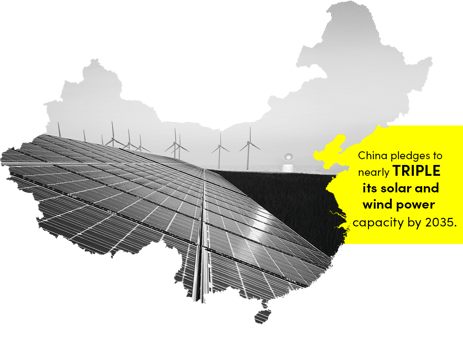
Moreover, developing countries (often the ones most impacted by the climate emergency) are leading the charge. For instance, the revised climate plans submitted to the U.N. by Uruguay and Ecuador before COP30 included strengthened costing and investment opportunities.
Most significantly, China is not backing away from climate action, recently setting its first absolute emissions reduction goal and ensuring a significant presence at COP30. Indeed, many energy experts view Trump’s withdrawal from international climate diplomacy as a colossal [own goal](https://www.theguardian.com/environment/2026/jan/09/a-colossal-own-goal-trumps-exit-from-global-climate-treaties-will-have-little-effect-outside-us) and gift to China—ensuring that the eastern superpower becomes the global leader in the unstoppable energy transition. With global investment in low-carbon energy now outstripping that in fossil fuels by, the markets have already decided. The age of oil and gas is ending. Those who do not embrace renewables will be left behind.
### **#3. Communication is key**
In 2026’s shifting context, storytelling is the crux of any successful sustainability strategy. Progressive corporate leaders are not retreating from climate action but are [rethinking how to communicate](https://www.thinkinkpr.com/ithinkink/b2b-pr-messaging-for-sustainability-companies) its value and relevance. Instead of focusing on large-scale targets and generic claims, they are showcasing specific, human-centered examples of how they are upgrading their operations to improve efficiency, boost resilience and protect the communities and landscapes on which they depend.
Accordingly, corporate sustainability communications is evolving. Shrewd business leaders are embracing radical transparency, revealing their impacts and demonstrating how they are reducing them to play their part in creating a greener, fairer and better future. They are helping to redefine prosperity, showing that business value is not just found on the balance sheet—but also in the gains created for people's well-being and nature.

Companies leading from the front are also moving away from top-down communications and engaging in dialogues. They are co-creating initiatives, products and services with stakeholders and consumers to improve their sustainability credentials by understanding the motivators and barriers on the ground. This collaborative approach boosts market visibility and brand loyalty, especially among Millennial and Gen Z consumers.
### **Reimagining our future**
Despite the current political backlash, climate action will continue to shape and be central to the economies of the future. Corporations can only grow and thrive if resources are reliable, communities are resilient, and the landscapes on which they rely are thriving too. With [seven out of nine](https://www.pik-potsdam.de/en/news/latest-news/seven-of-nine-planetary-boundaries-now-breached-2013-ocean-acidification-joins-the-danger-zone) planetary boundaries already breached, the truth is that business-as-usual is no longer a neutral choice.
This is the moment to press on to the better world that is still possible.
Our burning thought right now is, “How will companies respond to the changing rules, narratives, and expectations of the sustainability sector (and the stakeholders within it)? And how will they reimagine their communications to tell the stories of what that could look like and how we can get there?”
---
Find out more about sustainability communications and leading companies that are reframing their communications in this new context. Get your copy of [Disruption, Doubt, and a New Direction](https://www.thinkinkpr.com/disruption-doubt-new-direction-sustainability-outlook-ebook).
[ Back to Index](https://www.thinkinkpr.com/ithinkink) [Next Article ](https://www.thinkinkpr.com/ithinkink/payments-outlook-2026-infrastructure-trends-ebook)
Contents
Melissa McClements

[Email the Author](mailto:mmcclements@thinkinkpr.com)
---
Sign up for our insights on the convergence of business and PR
#### Recommended Articles
### [ The next economy is circular. And it’s already reshaping business](https://www.thinkinkpr.com/ithinkink/next-economy-circular-reshaping-business-sustainability)
### [ In the Global EV Race, China Leads, Europe Accelerates While America Reverses Course](https://www.thinkinkpr.com/ithinkink/global-ev-race-china-leads)
### [ Moving Beyond Sustainability: SAF's New Role in Energy Security and Supply Chain Stability](https://www.thinkinkpr.com/ithinkink/safs-new-role-energy-security)
[](https://www.thinkinkpr.com/)
- [Who We Are](https://www.thinkinkpr.com/who-we-are)
- [What We Do](https://www.thinkinkpr.com/what-we-do)
- [Research](https://www.thinkinkpr.com/market-intelligence-research-services)
- Industries
- [Discourse](https://www.thinkinkpr.com/ithinkink)
- [Contact](https://www.thinkinkpr.com/contact-us)
- United States
- Canada
- United Kingdom
- Australia
### Sign Up For Our Newsletter
-
[Privacy](https://www.thinkinkpr.com/privacy-policy) | [Contact Us](https://www.thinkinkpr.com/contact) © 2026 THINKINK. All Rights Reserved